

We Shouldn't Care This Much About Celebrities
On loneliness, odd celebrities, and de-centering fame

I once saw Leonardo DiCaprio three times in one week. It wasn’t that much of a random coincidence, I was in my clubbing phase in New York. I saw him once on the street, and twice at the club. Both times at the club, an excited frenzy spread through the crowd, it felt as if the oxygen in the room had been chemically altered by his presence. Models clamored to stand near him, men were trying to fist bump him, everyone was vying for his attention.
Throughout the night, I would glance over at him, keeping tabs on him. Every time he was in the exact same position. Standing by the DJ booth with his arms folded across his chest, a hat and sunglasses on, just watching the dance floor in front of him, staring. As I watched on, it struck me that he was a real human being. He is one of the last true A listers, an icon, but in that moment he was just a guy at the club. And to be honest, kind of an odd guy. He wasn’t dancing or talking to anyone, he didn’t look like he was having fun, he just stood and stared.
Any celebrity whose orbit I’ve ever been in is, well, odd. At best eccentric, at worst deranged. How could they not be? Their lives are weird, they don’t inhabit in the same world as us, they don’t live by the same rules. The idea of relatability that their PR teams push on us is a farce, an act put on to sell us things. Because at the end of the day that’s what the relationship between a fan and a celebrity is, transactional. We give them money and attention, they perform for us. They don’t know who we are, they don’t care. We think we know who they are, we don’t.
Over the last few weeks the overwhelming conversation online has been debating the actions and words of a few celebrities. Condemning them, defending them, debating other people over their behavior. I think it’s all kind of weird, to have this many people having such strong visceral and emotional feelings about the actions of strangers. Because that’s what they are to us, strangers.
The relationship we have to celebrities has tipped over into being fairly toxic. I’d say the average person spends an unhealthy amount of time considering the famous. We’ve reached a point where celebrities have a chokehold on culture. Anything they say or do seems to send us into a tailspin. They are far too important to us, their words and actions hold far too much weight.
Because at the end of the day who are these people? Most of them have a few hit songs, a couple of good movies. They haven’t changed the world, haven’t even created anything that groundbreaking or noteworthy. Most haven’t even gone to college or had any higher education. And like Leonardo DiCaprio standing in the club, the reality is they’re all a little bit odd. It’s not to say they aren’t talented at what they do, that they don’t have some good work, but do they really warrant this much of our attention? Why do they take up so much of the collective culture’s brain power?
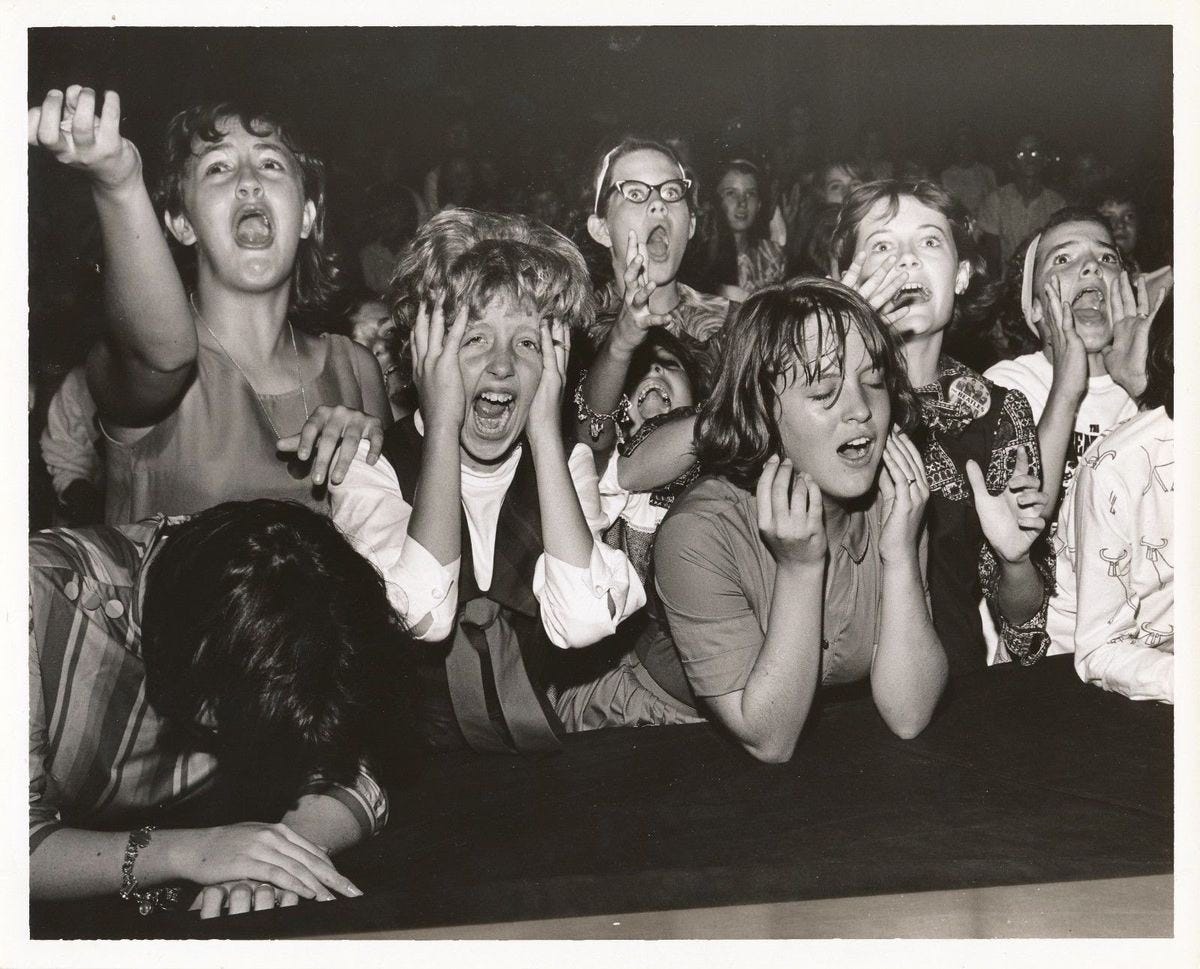
Perhaps it’s a symptom of a lonelier world, one where idols mean so much more to people because they have less in their real life. In person communities are dwindling, strong real life bonds are getting weaker, people spend more time alone and on their phone. We watch on at celebrities who strategically market themselves to us, make us feel like we know them. We see them going out, wearing fun clothes, dating, winning awards, getting attention, and we live vicariously through them. It makes us feel like we know them, like we’re part of something.
We comment on them, gossip about them, judge them, tell them what to do. They fill a void that I would guess used to be filled by things like community, religion, friends, and family. Celebrities serve as something to feel connected to in culture, when many lack any real life culture. They are a common a point of connection that we can relate too, when we don’t have many points of connection anymore.
But I think this is an unhealthy way to fill the void of community. Celebrities ask too much of us, they want too much attention and too much money, it’s exploitative. And in return we feel as though they owe us something, that they are indebted to us for making them famous. Vaguely threatening comments crop up like “we made the wrong person famous” or “you’re nothing without your fans.” Alongside the constant cultural conversation about their behavior online, it indicates that we think we’re in charge of them. It’s a rotten relationship.
Because at the end of the day, does it actually matter to any of our lives if a pop star was rude to a kid, a paparazzi, or a fan? Does it have any tangible impact on us if an actor said something off in an interview, didn’t seem grateful enough, said something clunky?
This isn’t to say that we should support and accept celebrities who are bad people, rather that we shouldn’t put so much emotional weight on them in the first place. Take them off their pedestals, give less of ourselves to them. They are people, not gods. We can’t tell them what they should and shouldn’t do. When a celebrity is “bad” it should serve as a reminder that they are just a random person and they probably shouldn’t be idolized. If anything it should encourage us to pay less attention to them, not more.
All of the emotions we spend on them, just gives them more relevance. Fame, especially in this world, is about attention, nothing more or less. The more we talk about them, the more important they become. And sometimes I think the more their lives matter, the less ours do. If we focus so much on their world, we aren’t focusing on our own. We insist on making them the center of all conversation, while we lose our own real life communities. We’re making ourselves spectators to their lives, while we have our own lives to be living.

thank u! been feeling this way regarding the insane chappell roan discourse
This was so well articulated. I grew up in a rural area without TV, so celebrity culture wasn't much of a thing for me as a teen. But as an adult, I've found it quite shocking how much folks let celebs dominate their lives.